“This invitation is called: ‘Traces of nature’. In a city, like in a forest, nature is everywhere, but it often takes more focus to actually notice it. Using all your senses, notice how nature is present in the streets of the city. I wonder if nature is noticing your presence, too?”
During a shinrin-yoku (forest bathing/therapy) walk offered by an ANFT certified guide, the guide invites the participants to take part in several ‘invitations’: voluntary activities suiting the very moment and place.
An invitation can be done while walking, standing or sitting and serves to connect participants with nature, themselves and each other.
I hope you will enjoy noticing various traces of nature popping up in this very special new Spring season as much as I do!
Simply being present in the natural world – with all our senses fully alive – can have a remarkably healing effect.
It can also awaken in us our latent but profound connection with all living things.
This is ‘forest bathing’ (‘bosbaden’), a practice inspired by the Japanese tradition of ‘shinrin-yoku’.
It is a gentle, meditative approach to being in nature an an anti-dote to our nature-starved lives that can heal our relationship with the more-than-human-world.
“Wander out into the fading light. Dusk. Notice with all your senses what this time of the days offers. Perhaps it will send you on a journey?”
Shinrin-yoku (forest bathing/forest therapy or bosbaden) is a dynamically developing practice based on the general principle that it is beneficial to spend time bathing in the atmosphere of the forest. There’s a long tradition of this in cultures around the world.
A guided shinrin-yoku walk consists of several ‘invitations’, short voluntary activities you are invited to take part in.
When a certified ANFT guide offers the invitations during a guided shinrin-yoku session, be assured that these are all crafted to slow down and open your senses.
You begin to perceive more deeply the nuances of the constant stream of communications rampant in any natural setting. You learn to let the land and its messages penetrate into our minds more deeply.
Of course, you can try all of the invitations in your own natural surroundings as well!
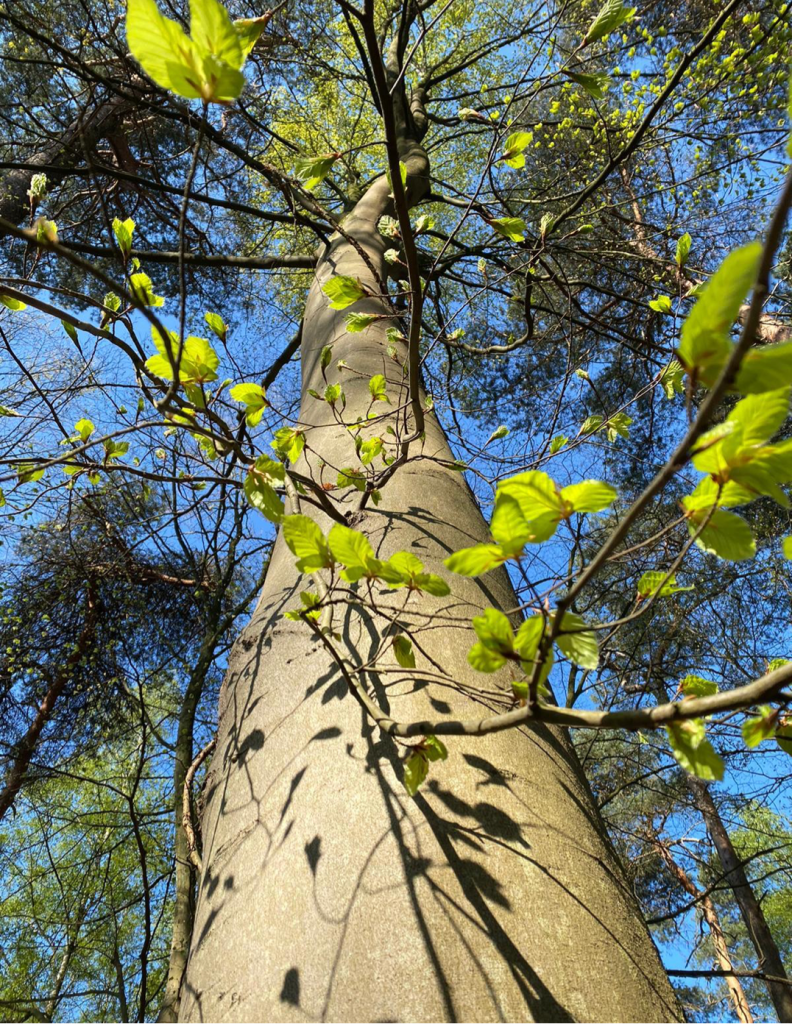
Komorebi – the dance between the light and the dark. In Japanese, there’s a special name for the contrast between the sunlight and shadow and the way the two dance through the trees: Komorebi.
Komorebi is one of my favo words.
Whenever I stroll through a forest or city-park, or sit by a pond or river, the reflection of the sun on the dancing leaves is so calming and pretty. The sun often projects ever changing images of dancing leaves and tree branches on my apartment walls or window curtains, too.
A scene of exquisite beauty!
Do you notice the interplay between the light and the shadows in your place?
Spring has just begun. Do you hear the growing number of bird songs, notice a difference in the light each day and smell the freshness of new beginnings?
To welcome a new season, may I share ten ‘Love Letters to the Earth’ from one of today’s most revered Zen Masters and an inspiration to many, Vietnamese Buddhist monk Thich Nhat Hanh, who passed away a few days ago at the age of 95?
Peace activist and Zen teacher Thich Nhat Hanh argued that change of lack of meaning and connection in peoples’ lives, resulting in peoples’ addiction to consumerism, and limiting climate change is possible only with the recognition that people and the planet are ultimately one and the same.
He invites us to engage in an intimate conversation, a living dialogue, with our Earth.
You can read the ten love letters in Emergence Magazine here.
I hope you will enjoy reading them as much as I did!
Happy Imbolc!
Marjolein
&….
Just in case you would like to (re)connect, slow down and be in nature in with a small group of like-minded people, and learn the basics of shinrin-yoku (forest bathing/bosbaden) from a certified shinrin-yoku guide, so you can continue practicing it on your own afterwards, please do check out my website for upcoming nature connection workshops.
“This invitation is called: ‘The Journey of Water’. The element of water can appear in various shapes and forms such as waves, fog, snow, clouds, raindrops, crystals, ice, or as your drinking or bathing water. The water may have at one time been frozen high on a snow-capped peak, or maybe it cascaded down a mountain stream or came from deep within the earth. In many traditions, it is believed water is healing and renewing, activates flow in your life and brings emotional balance. The water inside of you is not separate from all the waters of our beautiful planet. Maybe the water carries all the memories of its different forms?
In this invitation, I would like to invite you to go explore with all your senses the water around and within you.”
A guided shinrin-yoku walk consists of several ‘invitations’, small activities/exercises that invite you to connect with nature, your natural surroundings and yourself in various ways, using your different senses.
Endless possibilities!
Slow down. Listen. Feel. May the magic of nature be with you always.
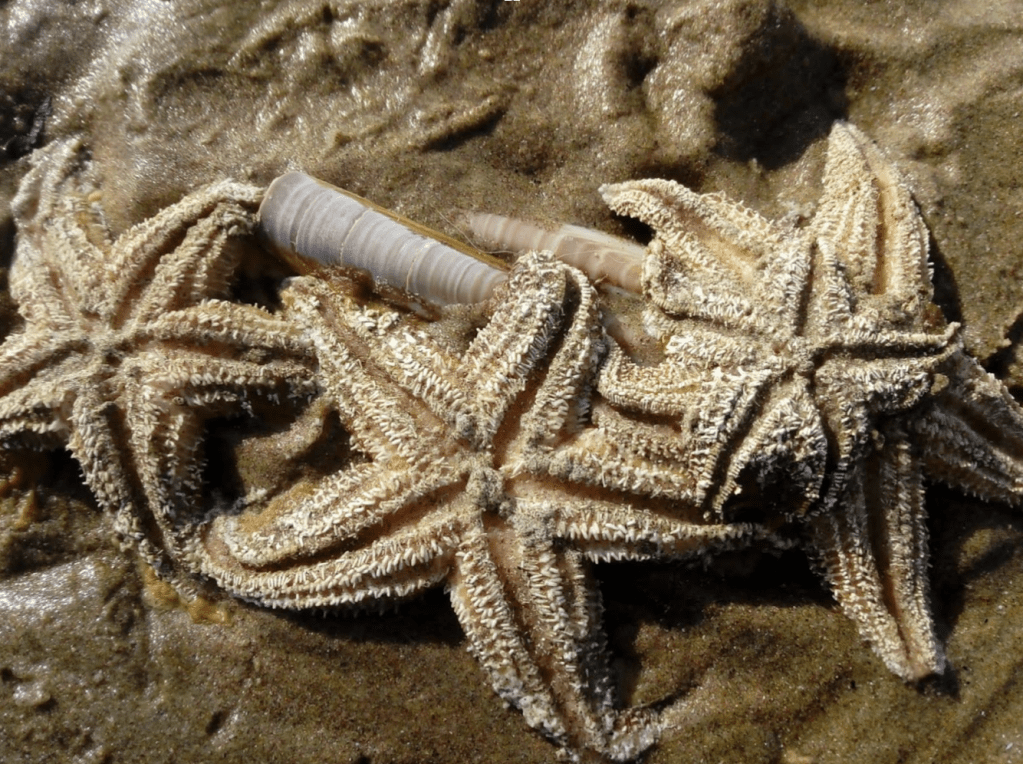
A strong breeze on my face. Bright sunlight warming my back. Sizzling noise coming from the surf below, trying to grab my feet. Hoarse cries of seagulls flying in the sky above me. My eyes being hypnotised by the dancing waves. In front of me thousands of starfishes. Making me walk with the stars. Smiled at by the stars. Guided by the stars. A message from the deep sea. In nature I never walk. Alone.
(Monday nature break at Zandvoort beach, 30 min. train ride from Amsterdam)
Go slow. Listen. Feel. Smile. You are home. In nature. @Stillness in Nature
You can hear the world breathing if you just listen.
These breezes whisper melodies of different lands,
Transcribed through time.
They are like wind chimes.
Swirling energy carrying seeds of wisdom.
You can hear them as they blow through leaves of ancient trees,
These breezes,
Breathing and exhaling,
Telling the stories of this world for an eternity.
Listen to the sea.
It is the lifeblood of this planet.
Pumping and pulsing through every crevice.
Connecting the nations of this world through its embrace-tracing patterns.
And the sands of our birth lands,
Crashing on shores,
Expanding past horizon,
Reaching deep into the depths of our imaginations.
Listen to the land.
It is the Earth’s belly,
Rumbling and turning as tectonic plates shift.
We shift through its soils,
Break into primates giving birth to life,
Giving birth to us.
We are grateful.
For every gift Mother Earth gives, we live.
Because the life of this land is perpetuated in righteousness.
We are blessed to see her beauty,
Taste her elegance,
Smell her power,
Touch her essence.
This world becomes a miracle when you take time.
To just listen.
(Kealoha)
Welcome to 2022! A new year to explore… and why not make the ancient practice of nature connection, with a relatively new legacy of research showing enormously positive physiological and psychological effects, your #1 health and wellness practice this year?
Unlike human society, with its ever changing politics, rules and regulations, nature is always there for you, accessible, patient and free: all you have to do is slow-down enough to notice, tune in with all your senses, become quiet and just relax.
After a period of stillness and regeneration, nature is subtly awakening. The morning light is coming out earlier each day, greeting me and my fellow Amsterdammers this week with mysterious fog and dramatic sunrises over the Amstel river.
You can notice tiny green plants re-emerging on the forest floor, in parks, gardens and balcony pots and trees are starting to grow small leaves again. The orchestra of birds is getting more rich and diverse each day.
Little magic is taking place, if you only take the time to sit still, tune in and notice!
Wanna practice shinrin-yoku in a small group of max. 5 other like-minded people, at a special hour of the day, when it’s still very quiet in the forest? Learn all about the shinrin-yoku basics, so afterwards you will have plenty of inspiration and tools to continue a shinrin-yoku wellness practice solo, or with your friends/family?
Please join me on one of my upcoming shinrin-yoku workshops! New dates/locations will be posted on my website each month.
“In all things of nature there’s something of the marvelous” (Artistotle)
It’s an early morning in late September. Sunlight is radiating through the morning fog on the Amstel river, painting the small waves in front of me with silver sparks. In the air I smell the unmistakable earthy, plant-like scent of sweet water. There’s hardly any wind, and in the air I can sense a crisp touch of Autumn. Waves slosh gently against the SUP board under my feet. With my paddle, I slowly touch the water back. Branches of big trees along the quay, covered in golden morning sunlight, are reaching out to the water, some of them all the way down. A couple of ducks and later on a beautiful swan swim along with me and my board, just for a moment. In the distance, a red bicycle is crossing a drawbridge. I hear the sound of a piano, coming from an open window of a house high above me on the quay. Little boats and big tour boats are still quietly moored at this hour, the hustle and bustle of ordinary city-life far ahead. In the sky high above me flies a flock of geese, making an unsettling type of noise. Window-blinds of the houseboats that I pass are mostly closed; a few times I notice someone making coffee or reading a morning newspaper. At this time of the day, I have the myriad of waterways of this so called ‘Venice of the North’ all to myself. A labyrinth of nature in the middle of a busy city, on which I can slow down, relax, breathe, tune-in, focus, find creativity, new ideas and connect to nature, while awakening all my senses.
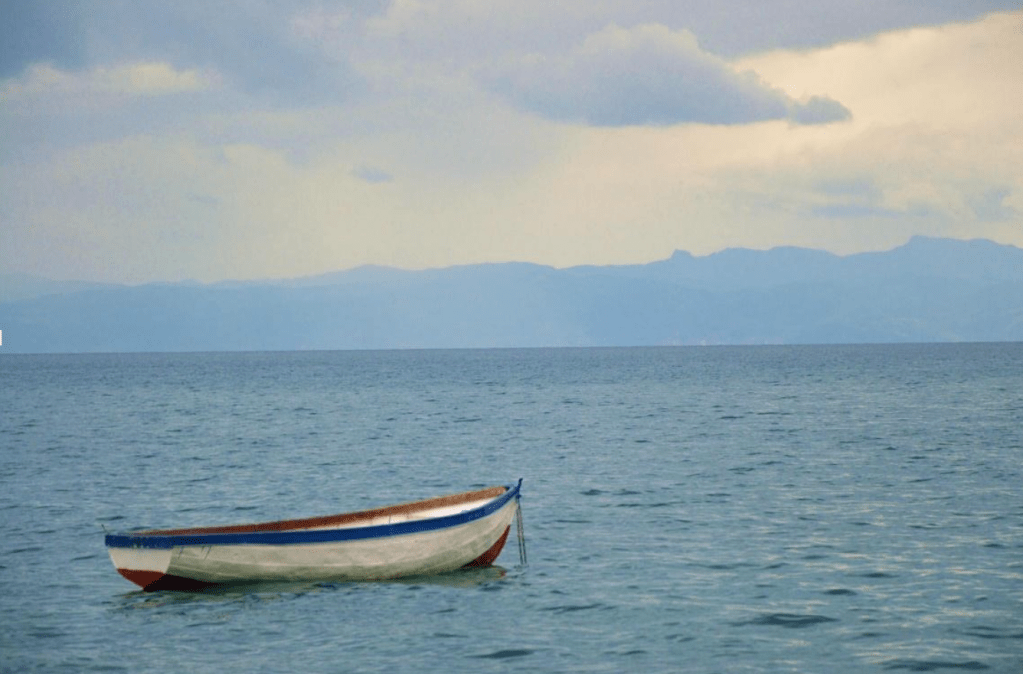
When I first came across shinrin-yoku (Japanese for forest-bathing, or in Dutch: bosbaden), a well-ness practice in which you immerse yourself in a forest setting by using all your senses and slowing down, I thought I could only use this technique in a forest, or perhaps a (big) city-park. Since I live in the middle of a capital city with only a small balcony facing some trees, I was sad I had to travel quite a distance to be in a forest and could not practice shinrin-yoku on a daily base. However, inspired by Vicky Kyan, one of my mentors during my training to become an ANFT certified forest therapy guide, offering nature bathing walks on a beach with not a tree in sight (Great Barrier Island, New Zealand), I realized there’s actually a lot of nature nearby my Amsterdam doorstep. Why not practice the Japanese inspired art of slowing down through sensory immersion in nature along the Amstel river, or one of the 165 canals, stretching over 75 kilometres of waterways?
Using the technique of shinrin-yoku when spending time along, on or in the water and slowing down through sensory immersion gives me a feeling of awe, purpose, contentment, vitality, connection and an overall positive emotion: effects similar to forest bathing. Engaging in the practice while being in my day-to-day surroundings has changed the way I see and experience nature forever.
In his landmark book “Blue Mind: The Surprising Science That Shows How Being Near, In, On, or Under Water Can Make You Happier, Healthier, More Connected, and Better at What You Do”, marine biologist and bestseller author Wallace J. Nichols also concludes that being near water sets our minds and bodies at ease. Combining cutting-edge neuroscience with compelling personal stories from top athletes, leading scientists, military veterans and gifted artists, Nichols answers questions such as how proximity to water can improve performance, diminish anxiety, amplifies creativity, expands compassion, increases professional success and improves our overall well-being.
Wanna learn more about the practice of shinrin-yoku, and experience what the art of stillness in nature through sensory immersion can do for you? Please join us on one of our guided shinrin-yoku walks!
Free online screening documentary “The Hidden Life of Trees” (Peter Wohlleben) October 13, 20:00-22:00 CEST, Goethe-Institut London
When Peter Wohlleben published his book “The Hidden Life of Trees” (2015), he stormed all the bestseller charts overnight: no-one had ever written about the German woods like the forester from the parish of Wershofen before.
In the documentary “The Hidden Life of Trees” (96 min, directed by Jörg Adolph), the sensorial capacities of cinema are used to thrillingly visualize Wohlleben’s observations, letting you into the secrets of nature that lie beyond human vision and temporality.
The film simultaneously offers fascinating and often visually stunning insights into life in our forests.
Wohlleben tells us in an entertaining and enlightening fashion about the solidarity and cohesion of trees and strikes a chord with his ever-growing community of readers: he brings us closer to these astounding living entities in guided tours of the woods and readings. Wohlleben travels to Sweden to see the oldest tree in the world; he visits businesses in Vancouver that are looking for a new approach to how to treat the woods; he sides with the Hambacher Forst demonstrators.
Because he knows that we humans can only survive if the woods are healthy – and that the eleventh hour is already upon us…
You can get your free ticket for the online screening of the documentary by the Goethe-Institut London here.
Enjoy!
& if you want to slow down, relax and tune into the language of nature live on a guided shinrin-yoku walk, do check out my website. There are new dates for October / November in the Amstelpark (Amsterdam) and Duin & Kruidberg, Nationaal Park Zuid-Kennemerland (Santpoort-Noord).
“There is something infinitely healing in the repeated refrains of nature – the assurance that dawn comes after night, and spring after winter” (Rachel Carson)
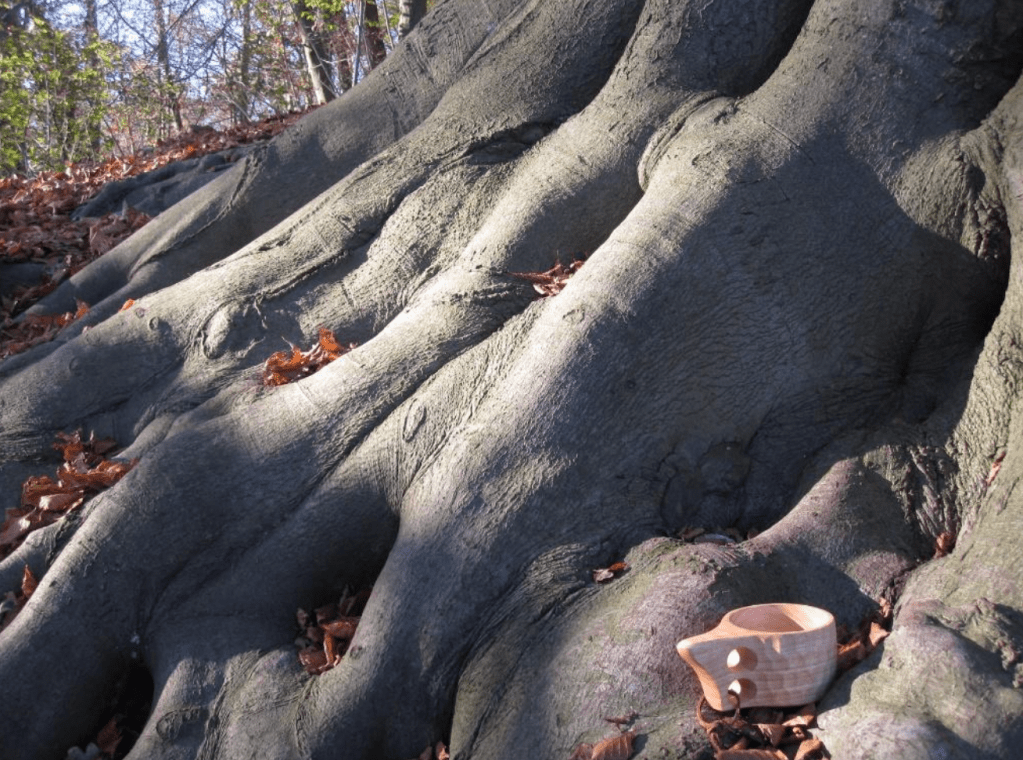
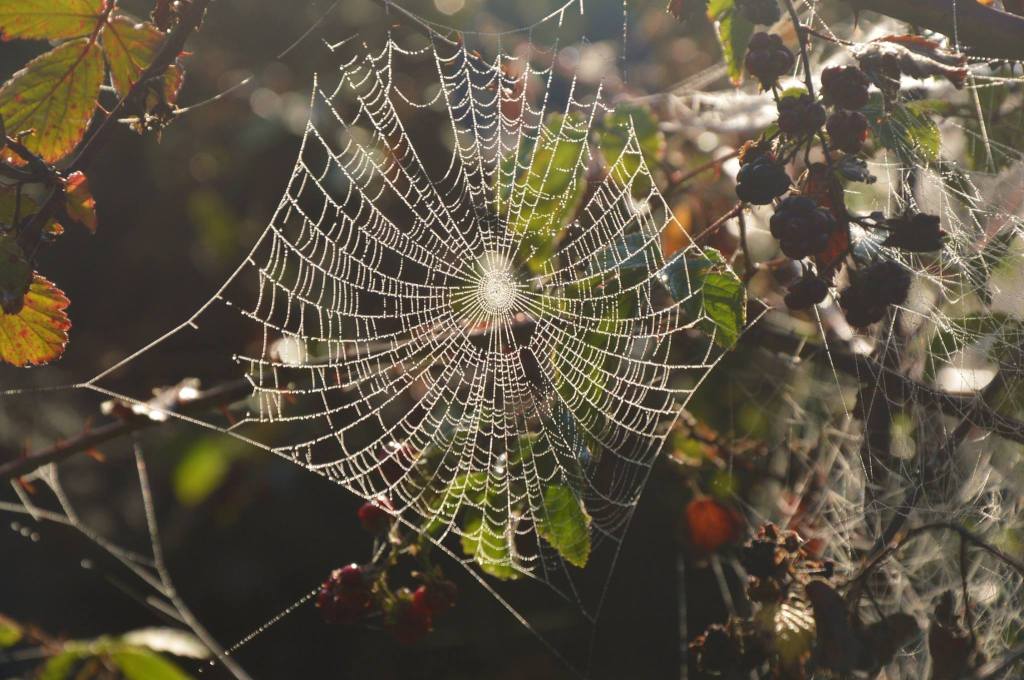
The evening light is fading, offering a more subtle palette of colours. Birds, hidden in the high trees and bushes set out for a final serenade. A strong aroma of earth, grass and flowers fills the air. Rain that fell in the hours leading up to the shinrin-yoku walk, has refreshed the atmosphere. Light reflects on thousands of raindrops that rest on top of flowers, plants, leaves and spiderwebs, turning them into little diamonds. The south-western wind brings in lyrics from a song by boaters, navigating the Amstel river in the distance during this golden hour. Human visitors to the Amstelpark are scarce at this time of the day. A curious rabbit observes us from a distance. I pour seven wooden cups of fresh herbal tea, six for us, one to offer back to Nature. We sit in a small circle on the grass, above us huge branches of two sycamore trees. This is my favo moment of a shinrin-yoku walk: the tea ceremony. A moment for participants to share, if they wish, their experiences with each other.
During tea – the final part of a shinrin-yoku walk -, many participants share that by truly slowing down and focusing explicitly on their senses, they experience a deeper connection. To the present moment, present place and their present state of being. This gives them focus, inspiration, calmness, joy and a feeling of deep relaxation.
Often, participants say they feel an elevation and rejuvenation of the mind, body and spirit.
Some participants also share what for them constitutes a ´door of connection´ to nature: “When we focused our attention on the sounds of the spot in the dunes where we were standing, I realized that for me, my sense of hearing really re-directs me away from the business in my head into the now. That’s so relaxing. Something I will do again when I am in nature.” Or: “The floral scents I smelled during one of the ‘invitations’ on the walk in a deserted Amstel park brought me back to where my passion as a chef originated, and how much I like to experiment with fresh herbs in dishes.”
What is known about the health benefits of shinrin-yoku or nature immersion, in which you engage as many senses as possible and aim to be truly present in the moment? In his book, ‘Shinrin-yoku. The Japanese Way of Forest Bathing for Health and Relaxation’ (2018), Professor Yoshifumi Miyazaki shares the results of his 29 years of research in this field:
– Increased relaxation of the body due to increased activity in the parasympathetic nervous system; – Reduced stress of the body due to a reduction in sympathetic nervous system activity; – Reduction in blood pressure after only 15 minutes of forest bathing; – Reduced feelings of stress and a general sense of wellbeing; – Reduction in blood pressure after 1 day of forest bathing, which effects last up to 5 days after taking the forest bath;
– Strengthened immune system and improvement of weakened immunity, with an increase in the count of natural killer cells, which are known to fight tumours and infection.
Miyazaki’s research into the effects of nature immersion on human beings has extended as far as considering the effects of looking at a bouquet of cut flowers or a pot plant or smelling naturally dried wood (as opposed to treated wood). More specifically, Miyazaki has examined their calming effects on the human body and mind, which may or may not lead to physiological relaxation and immune function recovery. This of course, in turn can help prevent illnesses.
Miyazaki concluded that by feeling part of your natural surroundings and the web of life as opposed to feel separate from it, your overall feeling of well-being increases. Further, a thing that we humans often have lost due to our disconnect to nature, is an understanding of the vital importance of community. Finally, there’s the positive impact of taking in the nature atmosphere, such as phytoncides (the chemicals released by plants and trees), ions and the earth’s surface electrons, for your body system.
If you are interested, there’s ongoing research on the health benefits of the practice of shinrin-yoku and nature connection. Do have a look at the Forest Library for a collection of the latest articles on the health benefits of shinrin-yoku and nature connection by popular press, as well as rigorously researched and peer-reviewed studies in this field: https://www.theforestlibrary.com/forest-bathing-online-articles
Or… just try a guided shinrin-yoku walk to experience the results for yourself, and learn how to really slow down, relax and reconnect with nature, while being guided by a certified guide. For upcoming walks in Amsterdam or its surrounding forests/seaside, please check my website www.shinrin-yokuclub.com.
“Make your heartbeat match the beat of the universe, and match your nature with Nature” (Joseph Campbell)



 stillnessnature.com